
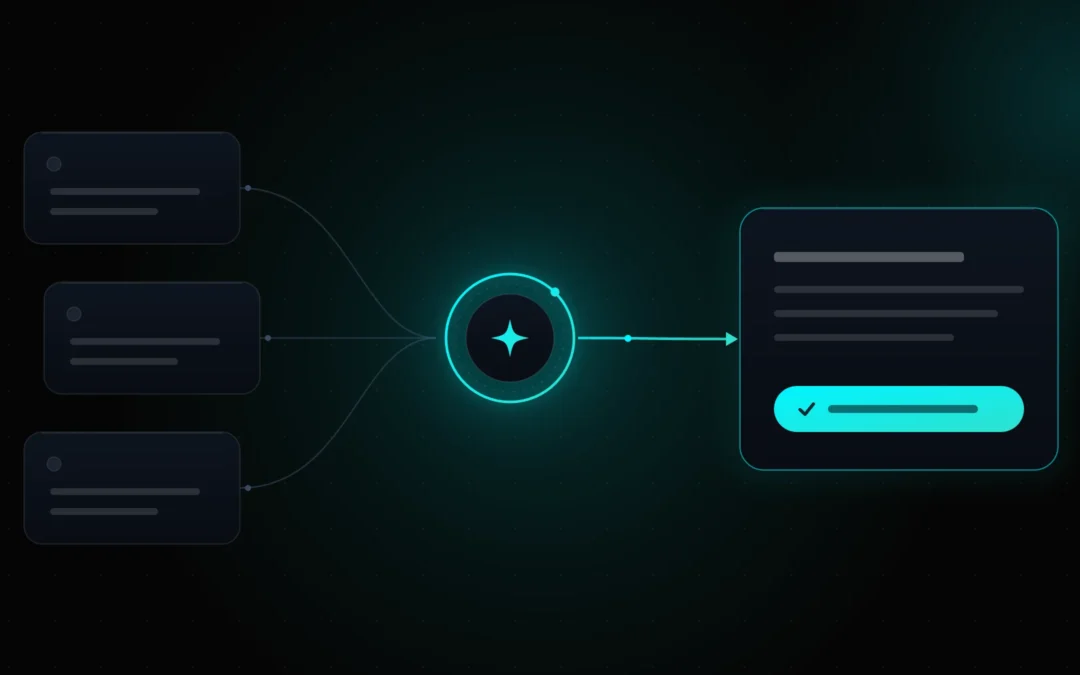
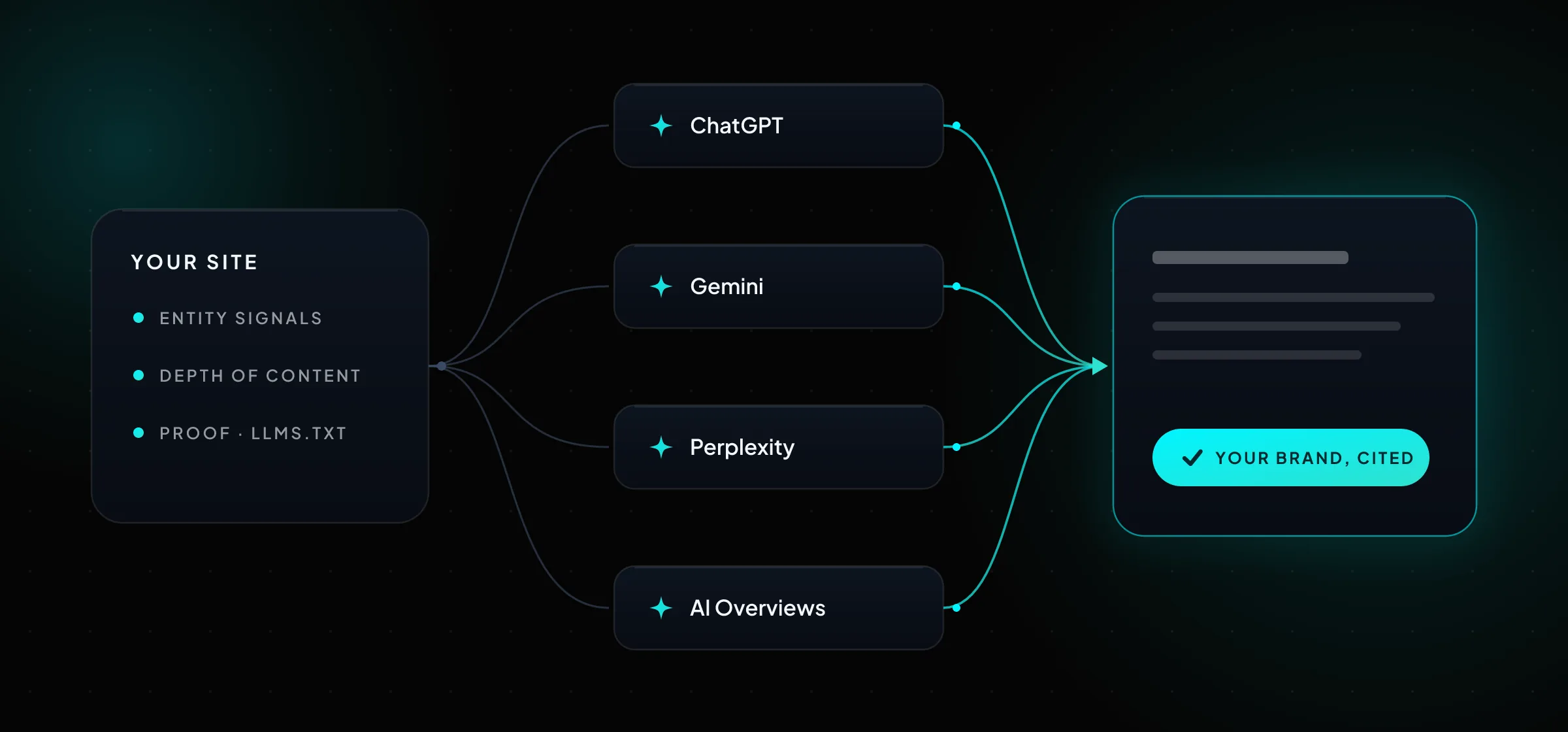
Generative Engine Optimization (GEO) is how you get an AI answer engine to understand your brand, trust it, and name it in the answer it writes. The engines that matter are the ones your customers already use: ChatGPT, Google’s AI Overviews, Gemini, Perplexity, and Copilot. SEO gets you into a list of links. GEO gets you into the answer itself.
That gap matters more every quarter. By early 2026, AI assistants were already handling somewhere around 12 to 18% of English-language informational searches, and Gartner expects organic traffic to commercial sites to drop by about a quarter as people take their first question to a chatbot instead of a search box. So the question stops being “do I rank?” and becomes “does the AI recommend me?”
Why GEO matters now
Demand is running well ahead of supply. Around 92% of marketers say they intend to optimise for AI search, yet only about 41% have actually started. That gap is the opportunity: the brands moving now are competing against far fewer people than they will be this time next year.
It also pays better than it looks. Visitors who arrive from an AI assistant tend to show up further down the funnel, already half-convinced, so they convert at a higher rate. One analysis put ChatGPT referrals near 16% and Perplexity around 10%, against roughly 1.8% for ordinary organic search. Fewer clicks, but much warmer ones. And this is no side experiment: forecasts have GEO spending climbing from under a billion dollars in 2025 to tens of billions over the next decade, which is a fair signal of where budgets are heading.
GEO vs SEO: what actually changes
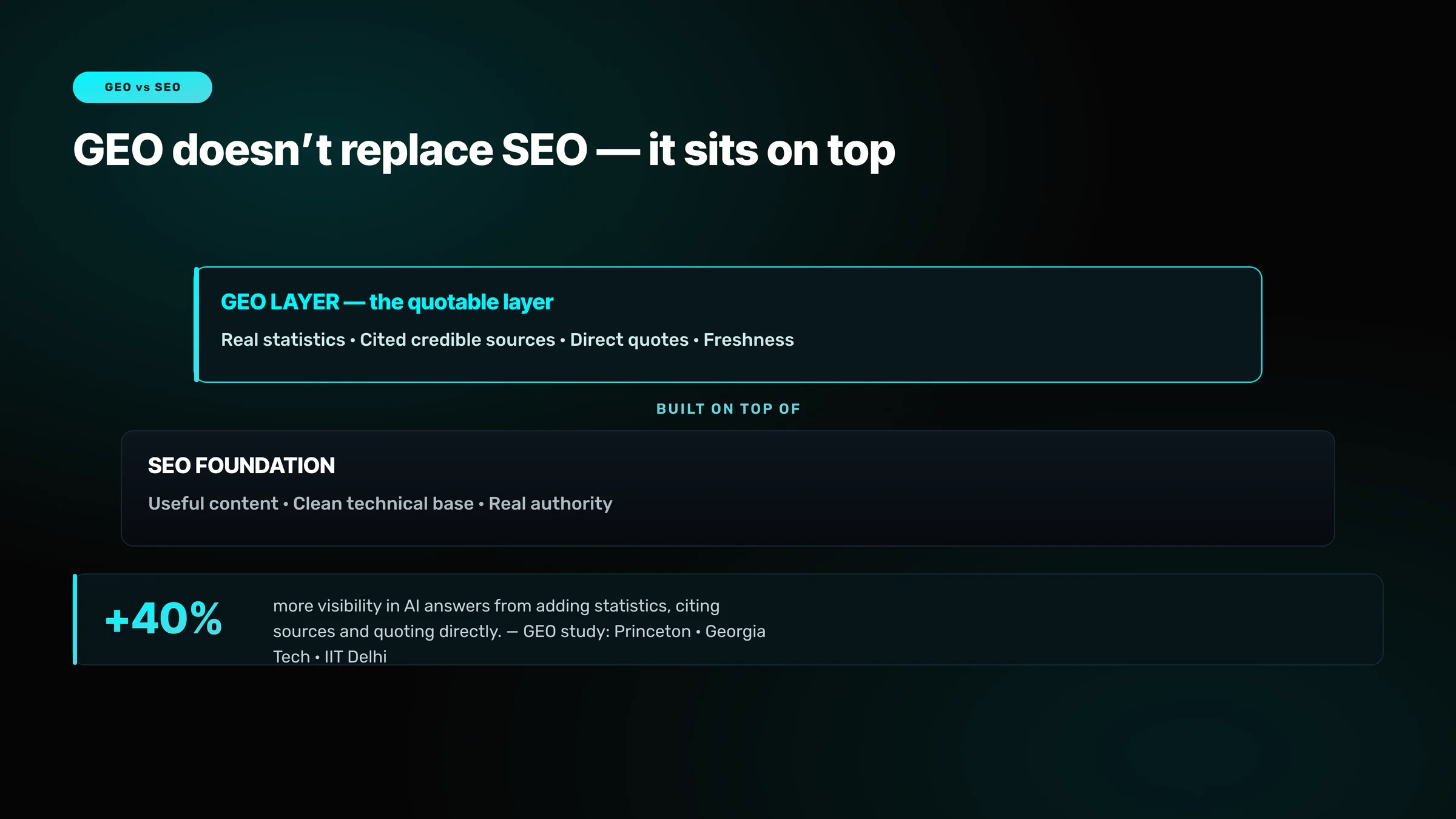
GEO does not replace SEO. It sits on top of it. The groundwork is the same as it has always been: useful content, a clean technical base, and real authority. What GEO adds is the layer that lets a machine quote you without second-guessing itself.
| Classic SEO | Generative Engine Optimization |
|---|---|
| Goal: rank in a list of links | Goal: be cited inside the AI’s answer |
| Optimises pages for keywords | Optimises passages for extraction and entities |
| Success = position and clicks | Success = mentions, citations and referrals |
| Authority via backlinks | Authority via corroboration across sources |
How AI engines decide what to cite
Most answer engines run on retrieval-augmented generation, or RAG. They pull a shortlist of sources first, then write a reply that cites the ones they trust. So the job is twofold: get onto that shortlist, and be the easiest source to quote once you are there.
The research is surprisingly specific about what helps. The original GEO study from Princeton, Georgia Tech and IIT Delhi found that a handful of repeatable tactics lifted a page’s visibility in AI answers by as much as 40%, and the strongest were adding real statistics, citing credible sources, and quoting directly. Large citation analyses agree. Freshness is rewarded: in one review of 6.8 million AI citations, about 85% came from content published in the previous two years, and Perplexity leans hard toward articles from the last 90 days. Clean structure helps too, because models prefer passages they can lift cleanly without guessing what you meant. But the biggest factor is consistency. When your site, your profiles, your listings and the people who mention you all say the same thing, a model is far more comfortable naming you. Wikipedia alone sits behind nearly half of ChatGPT’s top cited sources on factual questions, which tells you what that agreement is worth.
How to optimise for GEO
Start every page and FAQ that matters with the answer. Put a clean, self-contained response in the first two or three sentences, the kind of line a model could lift on its own, then back it with evidence. Statistics, named sources and direct quotes are precisely what the research rewards, so they earn their place. Make the page easy to parse while you are at it: descriptive headings, short paragraphs, FAQ blocks, and JSON-LD schema such as Article, FAQPage, and Organization or Person, so a machine reads you without ambiguity.
Then work on who you are to the model. A strong entity is a complete, consistent identity (who you are, what you do, where you operate) written into your structured data and echoed on LinkedIn, in listings, and anywhere credible people mention you. Keep that content current on a real schedule, since freshness is a measurable citation factor rather than a nice-to-have. Earn outside trust through listings, references and digital PR, which double as the corroboration these models lean on. Then measure it: track how often your brand gets mentioned and cited across ChatGPT, Gemini, Perplexity and AI Overviews, so GEO stays a number you can report instead of a guess.
The Arabic and GCC advantage
Here is the part most brands in the region miss. Almost all the GEO competition is happening in English. Far fewer companies publish structured, trustworthy content in Arabic or French, which means the bar to get cited by an AI in those languages is much lower right now than it is in English. If you work across Qatar, the Gulf and the Francophone markets, trilingual answer-first content is one of the cheapest routes to a citation you will find this year. That edge narrows as more brands catch on, so it is worth using while it lasts.
Frequently asked questions
Is GEO different from SEO?
They overlap, but yes. SEO wins you a ranking in a list of links; GEO wins you a citation inside an AI-written answer. GEO adds entity optimisation, answer-first writing, and outside corroboration on top of solid SEO.
Can anyone guarantee my brand gets cited by ChatGPT?
No, and I would be wary of anyone who says they can. What you can do is stack the odds: citable content, a clean entity, structured data, and credible corroboration, then watch how your brand actually shows up across the main assistants.
Does GEO replace SEO?
No. They feed each other. Strong SEO makes your content easy to find and trust, which is exactly what AI engines draw on when they decide who to cite. The sensible move is to run both.
How do I measure GEO?
Watch three things: how often AI answers mention your brand, how often they link to you, and where you land when they do, whether that is first or buried. Check it across ChatGPT, Gemini, Perplexity and Google’s AI Overviews.
Is AI-generated content bad for GEO?
Not by itself. The engines and Google reward content that is genuinely useful and accurate, whoever or whatever produced it, and they bury thin work no matter who wrote it. What decides the outcome is the editing, not the tool.
Get found by Google, and cited by the AI
GEO increasingly decides whether you show up at all when someone asks an AI instead of typing a search. Getting a brand understood, trusted and cited by those engines is the work I do. If that is on your roadmap, take a look at my AI marketing and GEO services in Qatar, pair them with SEO, or book a free call.